
Posted by molly mutt europe on 13.05.26
Dog bed cover vs dog bed: what is actually better for your home
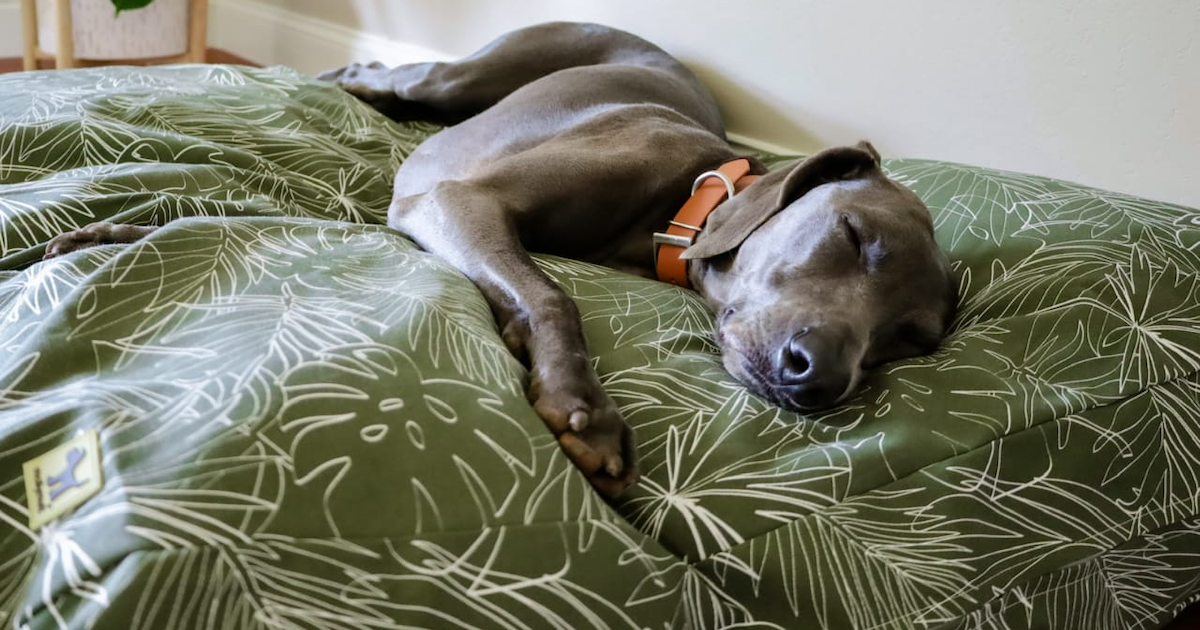
If you have ever replaced a dog bed and felt guilty about throwing the old one away, you are not alone. Most dog beds — the bulky, foam-filled, non-removable kind — end up in landfills after 12 to 18 months. The exterior gets destroyed, the foam degrades, and there's no practical way to clean the whole thing properly.
A dog bed cover works differently. It's a zip-up shell you fill yourself, using old clothes, blankets, or anything soft you'd otherwise donate or discard. When it gets dirty, you unzip it and wash it. When your dog destroys it, you replace only the cover — not the entire bed.
It sounds simple because it is. But it changes quite a lot about how dog bedding actually works in a home.
Why most dog beds don't last
Traditional dog beds are designed around a single purchase. The cover and filling are usually sewn together or glued in a way that makes washing difficult and replacement impossible. Even beds marketed as "washable" often mean only the outer layer is removable — the inner foam stays, collecting bacteria, dust mites and hair over months of use.
For dogs that chew, dig, or have accidents, the lifespan drops sharply. Most owners end up replacing the whole bed within a year — sometimes within a few months. And that bargain ends up being an expensive product for what it is.
The environmental cost adds up quickly. A foam dog bed weighs between 1.5 and 4 kilos. Multiply that by the number of dogs in Europe and the replacement cycle, and it represents a significant amount of waste that rarely gets talked about.
What a dog bed cover changes
The core difference is separation: the cover and the filling are independent. This matters for three practical reasons.
Washing is actually possible. A dog bed cover fits in a standard washing machine. You wash it as often as you need to — weekly if your dog is muddy, less often if they are not. The filling, which is usually your own old clothes and textiles, can be refreshed or replaced independently.
Replacement costs a fraction. If your dog tears through a cover, you replace the cover — not the whole bed. The filling stays. For dogs that are hard on their beds, this makes a significant difference over time.
The filling is already in your home. This is the part that surprises most people. A medium dog bed cover holds roughly the equivalent of a large bag of old clothes — jeans, jumpers, towels, anything that's been sitting in a donation bag waiting to go somewhere. The bed your dog sleeps on is made entirely from things that were heading for the bin. That's not a marketing claim; it's just how the product works.
Is it as comfortable as a regular dog bed?
This is the most common question, and the honest answer is: it depends on what you fill it with.
A cover filled with dense, heavy fabric — denim, thick cotton, old blankets — gives firm, supportive cushioning. A cover filled with lighter materials, like old t-shirts and fleece, gives something softer and more plush. You control the density by how tightly you pack it and what you use.
Most dogs show no preference for foam over fabric fill. What they respond to is scent — and a bed filled with your old clothes carries your smell, which many dogs actively seek out. It's one reason dogs sleep better on them than on a new foam bed straight from the box.
A note on size
Dog bed covers come in sizes that follow the same logic as human bedding — small, medium, large, and sometimes an extra-large or round option. The right size depends on how your dog sleeps. A dog that curls tightly needs less space than one that stretches out fully. A spacious Great Dane or two dogs that like to sleep together will need more room.
When in doubt, go slightly larger. A cover that's a little oversized can be packed more densely to compensate. A cover that's too small can't be adjusted.
The practical case
If you care about how much waste you generate, and you have a dog, a cat (or both) back home, a bed cover is the more rational choice. The upfront cost is comparable to a mid-range dog bed. The long-term cost — in replacements, washing, and landfill — is considerably lower.
It won't suit every household. If you have no old clothes or textiles to use as filling, you'll need to buy filling separately, which reduces some of the sustainability argument. And if you want a bed that arrives ready to use without any assembly, a traditional bed is simpler on day one.
But for most dog owners who have already replaced a bed once and didn't enjoy it, the cover approach is worth understanding properly before the next purchase.